By Renata Teles · Updated
Getting an F-1 student visa feels like the finish line. In reality, it is the starting line. The visa lets you enter the United States to study, but your life here has a rhythm and a set of rules that most people only learn once they arrive: how many classes you must take, when you can travel, what happens with money, and how to stay in status from the first day to the last.
Our founder, Renata Teles, was an international student herself, so this guide is written the way we wish someone had explained it to us: honest, practical and without legal jargon. If you are still in the planning stage, start with our guide to F-1 visa requirements. If you are already packing, keep reading.
Your first weeks: arrival, check-in and the 10-day rule
The first thing to know is timing. As a new student, you can enter the U.S. no more than 30 days before the program start date on your Form I-20Certificate of Eligibility for Nonimmigrant Student Status. An SEVP-certified school issues it, and you need it to apply for the F-1 visa. (the document your school issues that shows you were accepted). Arriving earlier than that is not allowed, so plan your flight around it.
Once you land, contact your DSODesignated School Official: the school employee who manages your SEVIS record. (Designated School Official, the person at your school who manages your student record) right away. Study in the States, the official SEVPStudent and Exchange Visitor Program: the ICE program that certifies schools to enroll F-1 students. website, says to contact the DSO when you enter the country and again no later than the program start date on your I-20. Most schools call this "check-in" or "reporting". It is what tells SEVISStudent and Exchange Visitor Information System: the government database that tracks F-1 students and their schools. (the government system that tracks international students) that you actually arrived and started.
Then comes housing, a phone number and a bank account. One detail people forget: every time you move, you must report your new address within 10 days, following your school's process. It sounds small, but your address is part of your official record.
What "full course of study" means on an F-1 student visa
This is the rule that shapes your whole routine. F-1 students must maintain a "full course of study" every term. For undergraduate students at a college or university, the regulation (8 CFR 214.2(f)(6)) sets this at a minimum of 12 semester or quarter hours per term, or the equivalent approved for that school. Graduate programs and other school types have their own definitions, which your school certifies.
Online classes are where many students get confused. Under the same regulation, only one class or three credits per term taken fully online or through distance education can count toward your full-time load. The rest must require your physical attendance. Some programs in our network use hybrid formats, meaning part of the learning happens in person and part online. Formats vary by school and must follow SEVP rules, so always confirm with your DSO how your specific program counts.
Being enrolled is not enough. You need to attend your classes and make normal academic progress. If a class is too hard or life gets heavy, talk to your DSO before you drop anything. A reduced course load is sometimes possible, but only with DSO approval in advance. Dropping below full time on your own is one of the fastest ways to lose status.
Money, work and taxes: the part nobody likes to talk about
Here is the honest truth: an F-1 student visa does not come with an automatic right to work. When you applied, you had to show you could pay for tuition and living costs, and that is what schools and consular officers expect you to rely on. Work options exist, such as on-campus jobs and practical training for eligible students, but they have limits and rules. We explain them in can F-1 students work in the U.S.. Working without authorization can end your status and affect your future visas.
Your monthly budget usually includes tuition, rent, food, transport and health insurance. Many schools require students to have health insurance, so ask about this before you enroll. Costs also change a lot by region. A big city is usually more expensive than a smaller town, and rent can vary widely even inside the same state. Our pages for students in Florida and Texas talk about what to consider in each place.
Taxes surprise many students. Even if you earned no U.S. income, most F-1 students need to file Form 8843 with the IRS each year. It is a short statement that explains why your days in the U.S. should not count toward the "substantial presence test", the rule that decides if you are taxed as a resident. According to the IRS, if you do not have to file a tax return, you still mail Form 8843 on its own. If you did earn income, other forms apply, and a qualified tax professional can help.
Travel, holidays and your annual vacation
Yes, you can visit home. Before you go, talk to your DSO. To come back, Study in the States lists what you need: a Form I-20 signed for travel by your DSO within the last year, and a passport valid for at least six months after your reentry date (some countries have an exception, so check the official list). You should also not be outside the U.S. for more than five months. Carry your documents with you, never in checked bags.
Breaks are part of student life too. Under the regulation, you are considered in status during your annual vacation (usually summer) if you are eligible and intend to register for the next term. Schools on a quarter or trimester calendar can have a different vacation term, so check your school's calendar with your DSO.
Culture, loneliness and bringing your family
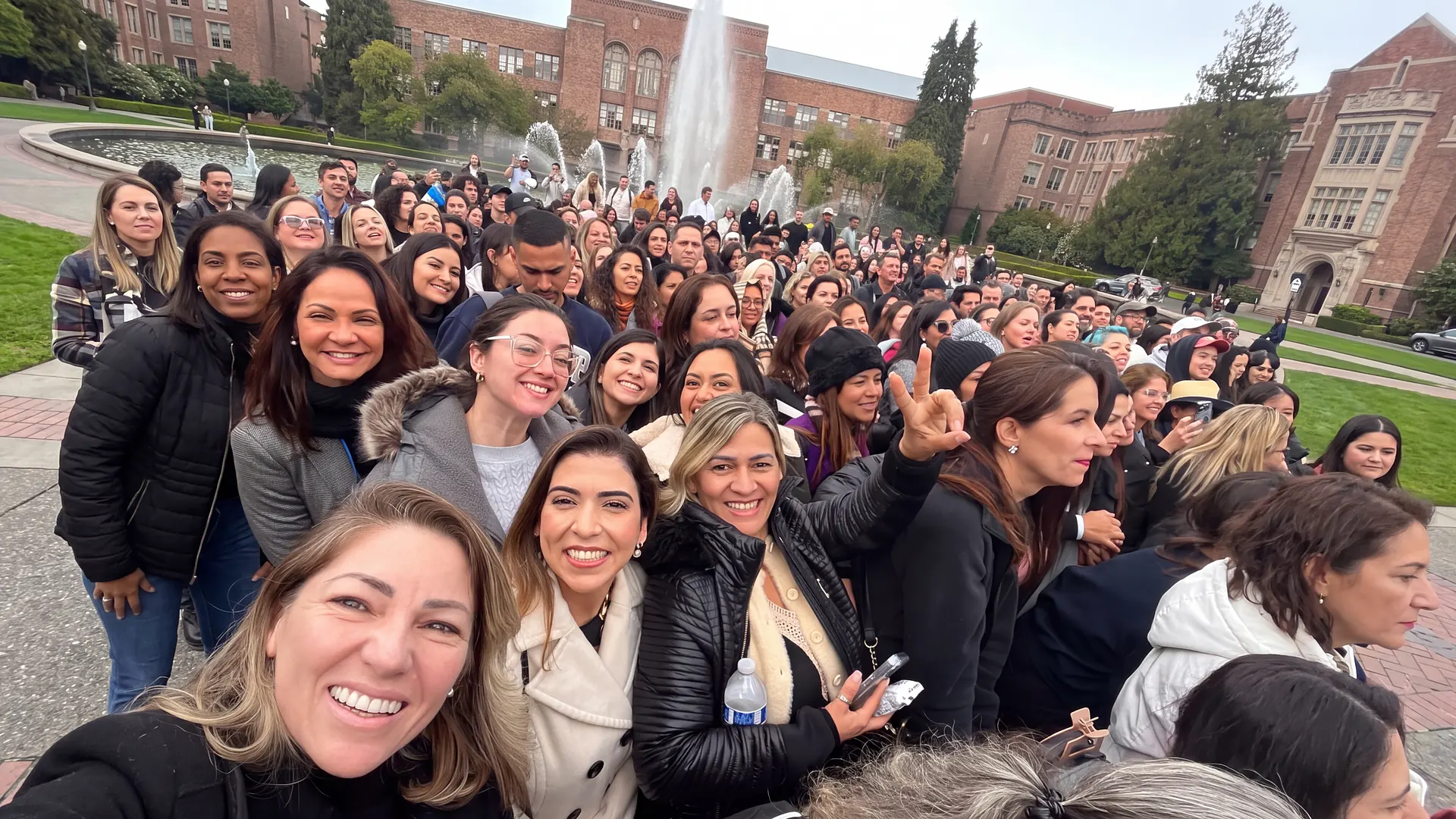
Nobody warns you about the quiet moments. The first winter, the first birthday far from home, the first time you cannot find the right words in English. Feeling lonely is normal, and it does get better. Many students find their people in student groups on campus, in churches, and in the Brazilian and Latin American communities that exist in many U.S. cities. Say yes to invitations, even when you are tired. Friendships here often start at a potluck.
Some students do not come alone. Your spouse and minor children can come as F-2 dependents, each with their own I-20. F-2 dependents cannot work, and an F-2 spouse can only study part time, while children can attend school. If your family is part of the plan, see our F-2 visa support.
New 2026 rules and where things go wrong
The rules changed recently. DHS published a final rule on July 17, 2026, effective September 15, 2026, that ends "duration of status" for F students. New students are now admitted for a fixed period based on the program length on the I-20, up to four years, plus 30 days to arrive and 30 days to depart. Students who need more time must apply for an extension of stay with USCIS or leave and reenter. The period to depart after finishing your program is now 30 days instead of 60 under the new rule, while students admitted before the change have transition rules. How it applies to you depends on when you were admitted, so check with your DSO.
Most problems come from a few mistakes: dropping below full time without approval, working without authorization, forgetting to update your address, and missing deadlines when changing schools. A school change is done through a SEVIS transfer, and the dates matter. If you are thinking about it, read about our SEVIS transfer support early, not at the last minute.
Remember that Ampara is an academic consulting company, not a law firm. For legal questions about your status, talk to a licensed immigration attorney or our partner law firm.
How Ampara helps you build a life that works as an F-1 student
A good student life starts with the right school. A program that fits your budget, your English level, your city and your family plans makes everything else easier. That is what we do: we analyze your profile, present options from our network of partner schools, and handle the enrollment so the school can issue your I-20. We have helped more than 1,500 clients take this step, and you can learn more about us or see how school placement works.
The first consultation is free. If you want to talk about your plans, message us on WhatsApp.
Official sources
- Maintaining Status, Study in the States
- Traveling as an F or M Student, Study in the States
- Travel, ICE SEVIS
- 8 CFR 214.2, eCFR
- DHS Publishes Final Rule Establishing a Fixed Time Period of Admission, Study in the States
- Final Rule FAQ: Fixed Time Period of Admission, Study in the States
- Establishing a Fixed Time Period of Admission, Federal Register
- About Form 8843, IRS
- Substantial Presence Test, IRS
Rules and fees change. This guide is general information, checked against the official sources above on September 25, 2026, and it is not legal advice. Ampara Immigration is an educational consulting firm, not a law firm, and does not provide legal advice. Read our disclaimer.